
There are an estimated 1200 kowaris left in the wild, restricted to fragmented refuge populations in north-east South Australia and south-west Queensland. Facing ongoing threats from predation, habitat degradation and climate change, kowaris were uplisted from Vulnerable to Endangered under the EPBC Act in 2023. Although identified as being at-risk of local extinction, prior to 2022 kowaris were not protected in any form of safe-haven.
This was until Arid Recovery, a fenced conservation reserve within the arid-zone of South Australia stepped in!
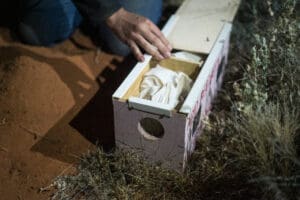
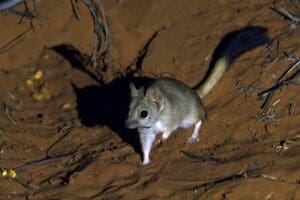
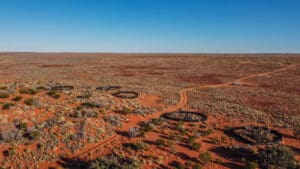
In August 2022, twelve kowaris were translocated from Clifton Hills Station to Arid Recovery. The release cohort was carefully chosen to include eight females carrying pouch young, to bring more genetic diversity to the small population while also encouraging quick population growth. This was the first translocation of kowaris to be attempted!
The release at Arid Recovery followed a carefully structured translocation plan, using custom-built soft-release pens to help them settle in to their new home. VHF radio-transmitter collars were used to keep an eye on the new arrivals as they left the pens and explored the reserve. The new kowaris were tracked by Arid Recovery staff for three months, allowing them to track individuals to their chosen dens, and monitor the translocated individuals and their growing offspring that were getting ready to disperse. Eleven kowaris were successfully tracked in this time (one collar fell off a male). Six of the females raised at least three young beyond the denning stage.
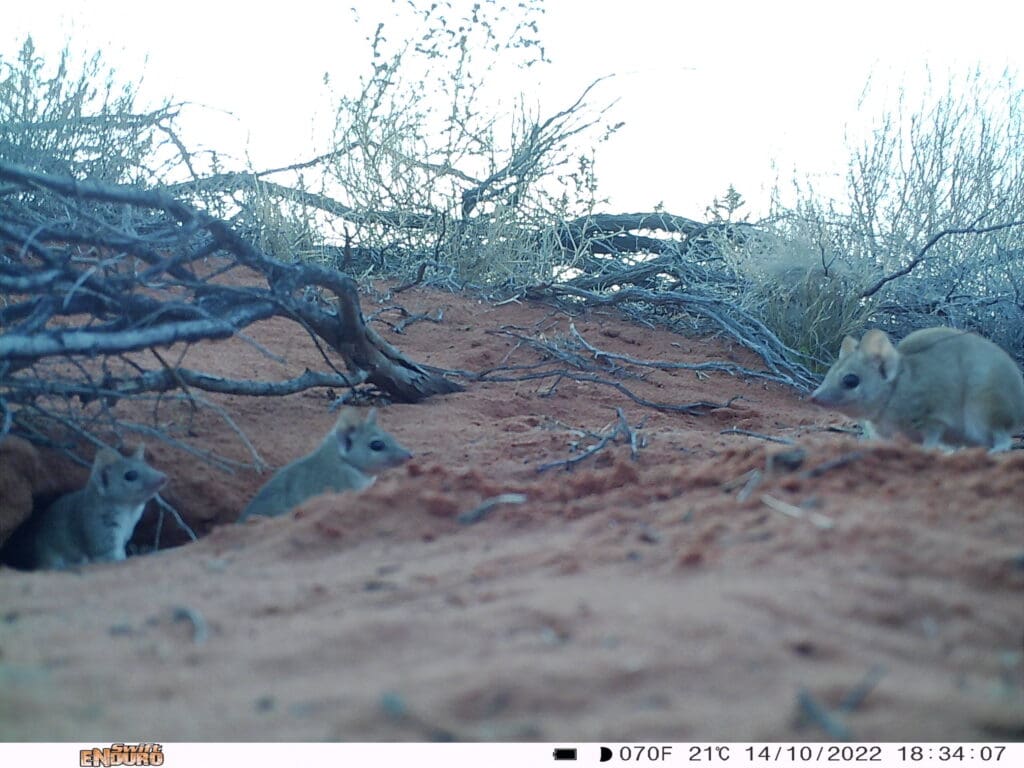
Three years after their release, the kowari population has grown from the original twelve individuals to an estimated population of over 35! A permanent grid of cameras continues to monitor constantly, confirming that the population has established, persisted and expanded across the reserve. Individuals have been detected up to four kilometers north and five kilometers south of the initial release location. These cameras are also providing insights into kowari behaviours, detecting a seasonal rhythm of activity – quieter in the winter months followed by an increase in activity in spring and summer.
In addition to camera monitoring, since 2024 Arid Recovery and Team Kowari have been conducting biannual surveys to get an even clearer picture of the population. These surveys have shown that animals are healthy, in good condition and are continuing to breed, suggesting the population will only keep growing!
Arid Recovery currently supports the only protected kowari population in South Australia. However, there’s much more to species conservation than just protecting them behind a fence. Continued monitoring and research on this protected population will provide insights into how kowaris thrive when certain threats are removed. By applying this knowledge to wild populations that co-exist with threats such as large herbivores and feral species, this can help inform what needs mitigating for population recovery across the kowaris home range.
This blog is based on a presentation delivered by Arid Recovery Ecologist Caitlin Rutherford at the Ecological Society of Australia 2025 Conference in Adelaide. Co-authors were Molly Barlow, Katherine Tuft, Katherine Moseby, Lauren Young and Genevieve Hayes. More information about the translocation can be found on Arid Recovery’s website.
Photo credits: Ines Badman and Robert Dugand