
Wednesday morning on a Kowari Survey
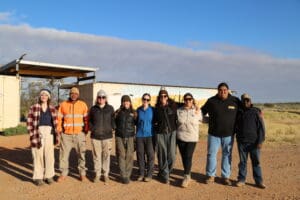
It’s 5:00am on a Wednesday in the first week of May, and three teams of Arid Recovery ecologists, Team Kowari researchers and volunteers are climbing into work vehicles – wearing beanies and carrying travel mugs of hot drinks. Datasheets, calico bags, wool, duct tape, dog biscuits and hessian sacks are strewn around the utes. It’s the middle of the annual kowari survey at Arid Recovery – five nights of trapping across three paddocks of the reserve. The teams are a mix of kowari enthusiasts: Arid Recovery’s Ecologists and two Conservation Interns, an Adelaide University PhD student, five Kokatha Rangers, and a kowari advocate who has ridden her bike across the Simpson Desert raising money for the species: Kirstin – plus her five-year-old son Otto. The task at hand appears simple: set 186 traps across an 80km2 area, bait with dog biscuits soaked in tuna oil and kangaroo mince, insulate the
Three Years of Kowaris at Arid Recovery
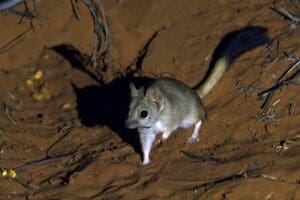
There are an estimated 1200 kowaris left in the wild, restricted to fragmented refuge populations in north-east South Australia and south-west Queensland. Facing ongoing threats from predation, habitat degradation and climate change, kowaris were uplisted from Vulnerable to Endangered under the EPBC Act in 2023. Although identified as being at-risk of local extinction, prior to 2022 kowaris were not protected in any form of safe-haven. This was until Arid Recovery, a fenced conservation reserve within the arid-zone of South Australia stepped in! In August 2022, twelve kowaris were translocated from Clifton Hills Station to Arid Recovery. The release cohort was carefully chosen to include eight females carrying pouch young, to bring more genetic diversity to the small population while also encouraging quick population growth. This was the first translocation of kowaris to be attempted! The release at Arid Recovery followed a carefully structured translocation plan, using custom-built soft-release pens to